
The Interior Gets Less Respect Than It Deserves
Walk into most detail shops and you’ll see walls of exterior products — polishes, coatings, sealants, wash soaps. Then look at their interior shelf: one all-purpose cleaner and a bottle of tire shine they sometimes spray on dashboards.
This is a problem. Clients spend 100% of their driving time inside the car. The interior is what they touch, smell, and see every single day. An exterior that gleams means nothing if the interior feels neglected.
Yet most detailers treat interior work as an afterthought — a quick vacuum, a wipe with APC, and a spray of fragrance. The result is interiors that look “clean enough” but lack the depth, feel, and longevity of a properly prepared and protected cabin.
Surface Preparation: The Step That Changes Everything
Here’s the step most detailers skip entirely: surface preparation before dressing. Just like you wouldn’t apply a ceramic coating to unwashed paint, you shouldn’t apply interior dressing to unprepared surfaces.
Oils from skin contact, silicone residue from previous dressings, dust, and environmental contaminants all sit on your interior surfaces. If you apply dressing directly on top of this layer, you’re sealing in the contamination. The dressing sits on top of the residue instead of bonding to the actual surface. Result: uneven sheen, greasy feel, and dressing that wears off in days.
A dedicated surface prep spray strips away this contamination layer and leaves the bare surface exposed and ready to accept protection. The difference is immediately visible — dressings go on more evenly, absorb better, and last dramatically longer.
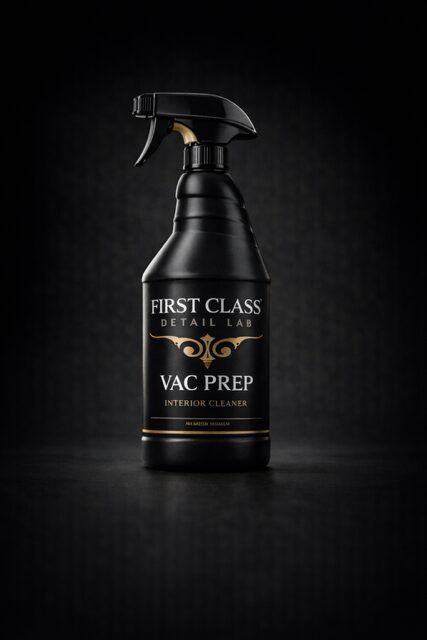
Vac Prep
Anti-Static Interior Cleaner
Vac Prep is a professional anti-static interior cleaner designed to reduce static charge in carpets, fabrics, and plastics, making vacuuming faster and more effective.
Working Through the Cabin Systematically
Interior detailing should follow a top-down, systematic approach. Start with the headliner, then upper dash and visors, move to the mid-level surfaces (door cards, center console, steering wheel), and finish with the lower areas and carpets.
For each surface, the process is: vacuum loose debris, apply surface prep spray and agitate with an appropriate brush, wipe clean with a microfiber, then apply your chosen dressing or protectant.
Leather seats need special attention. Prep spray removes body oils and old conditioner residue. Follow with a leather-specific cleaner if needed, then condition and protect. The prep step ensures the conditioner actually penetrates the leather rather than sitting on top of a layer of old product.
Plastic trim, vinyl surfaces, and rubber components all benefit from the same prep-then-protect approach. The material may change, but the principle remains: clean the surface at the molecular level before adding any product.
The Anti-Static Advantage
One of the most underappreciated benefits of proper surface preparation is the anti-static finish it can leave behind. Static electricity is the primary reason interiors get dusty so quickly after detailing.
A surface prep spray with anti-static properties neutralizes the electrical charge that attracts dust particles. Combined with a quality dressing, this can keep interiors looking fresh for weeks instead of days.
This is also a powerful client education opportunity. When you explain to a client that their interior will stay cleaner longer because of your prep process, you’re differentiating yourself from every other detailer who just sprays and wipes. It’s a tangible, visible benefit that elevates the client experience.
Turning Interior Work Into Premium Revenue
Interior detailing is one of the highest-margin services you can offer. The product cost per vehicle is minimal, the time investment is moderate, and the perceived value to the client is enormous.
By adding a proper surface preparation step, you elevate every detail because you’re preparing properly. You’re not just cleaning — you’re preparing, protecting, and extending the life of the interior surfaces. That’s a service that elevates your brand.
Document your process. Show clients the before and after of prepped vs. unprepped surfaces. Let them feel the difference. When they understand what you’re actually doing — and why their last detailer’s results faded in a week — they’ll see the difference in your standard.
Leave a Reply